
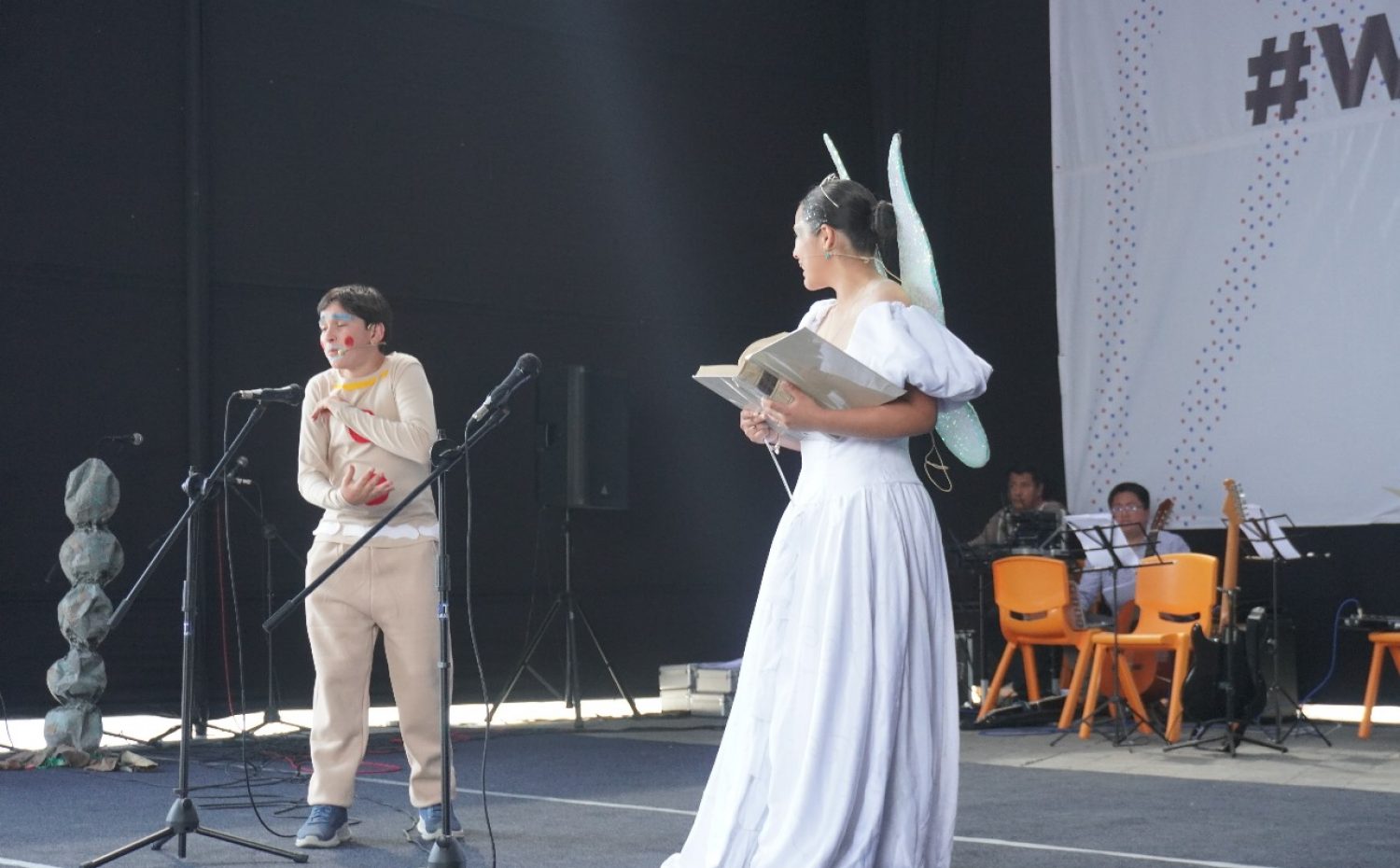
At Nordic International School, this year’s Secondary programme has been strengthened through an approach that aligns closely with Nordic educational principles, particularly those outlined in Drama and Theatre in a Nordic Curriculum Perspective (Richards). This perspective views drama not only as an arts subject, but as a learning medium—a space for exploration, meaning-making, and democratic participation. In this spirit, our methodology blends theoretical foundations with practical investigation, encouraging students to discover theatre as a comprehensive expressive system that integrates body, imagination, movement, critical reflection, and collaborative creation.
Within this framework, musical theatre becomes more than a performance discipline: it becomes an educational tool that fosters communication, creativity, emotional understanding, autonomy, and confidence. Consistent with the Nordic emphasis on process over product, the programme prioritises curiosity, experimentation, and co-construction of knowledge.
Foundational Stage: Grade 6 and Grade 7
Students in Grade 6 and Grade 7 have taken part in an introductory stage of musical theatre. While singing has not yet been introduced, students are developing the essential foundations: character creation, physical expressiveness, rhythm and stage movement, ensemble work, and short scene-building. Through hands-on theatre activities, they begin to understand performance as a multisensory learning process—one that mirrors the Nordic belief that learning should be active, experiential, and grounded in the learner’s own discoveries.
This stage is intentionally not designed towards an immediate final presentation. Instead, it supports students in building artistic awareness, developing autonomy, and learning to interpret and create from multiple perspectives. Such foundations echo the Nordic notion of “learning through doing”, preparing students for future stages in which singing, acting, and choreography merge as a unified expressive language.
Extending the Vision: Grade 9 and Grade 11
Older students have also engaged in artistic explorations connected to musical theatre, integrating both classical and contemporary influences.
In Grade 9, students worked with elements of West End theatre alongside Shakespearean drama. Through heightened text, poetic language, and symbolism, they explored tools that demand emotional intention and clarity of expression—skills equally essential in musical theatre. This reflects a Nordic curricular principle: using drama to deepen linguistic, emotional, and interpretative capacities. The unit concluded with short monologues inspired by modern musicals, blending classical technique with contemporary performance styles.
In Grade 11, the programme expanded into research-based and media-driven work. Students collaborated to build a historical timeline of musical theatre, from its roots to current trends, followed by the creation of a digital artistic piece (a reel or TikTok-style video). This project aligns with Nordic emphasis on student agency, multimodal literacy, and the use of creative technologies as tools for expression rather than passive consumption. Students learned to evaluate what makes a piece engaging, effective, and culturally relevant while gaining a broader understanding of theatrical evolution.
The Human and Democratic Dimension of Theatre Learning
Across all year groups, the performing arts have contributed to the development of independence, leadership, and shared responsibility—values strongly associated with Nordic pedagogy. Students learned to negotiate ideas, distribute roles, listen actively, support peers, and collaborate towards a common goal. Drama becomes a democratic space where young people practise communication, collective problem-solving, and empathy.
As Richards notes in the Nordic context, drama helps students “explore the world as it is and as it might become.” Likewise, philosopher Maxine Greene reminds us that the arts allow us “to look at things as if they could be otherwise.” In our programme, these ideas come to life as students imagine new possibilities, connect with emotions, and express themselves with authenticity.
Looking Ahead
As we continue strengthening the performing arts across Secondary, our vision is to deepen students’ engagement with the Nordic principles of creativity, collaboration, autonomy, and inquiry. We aim to ensure that drama and musical theatre remain not only artistic experiences, but powerful spaces for exploration, communication, and holistic learning—rooted in curiosity, agency, and the joy of creating together.