
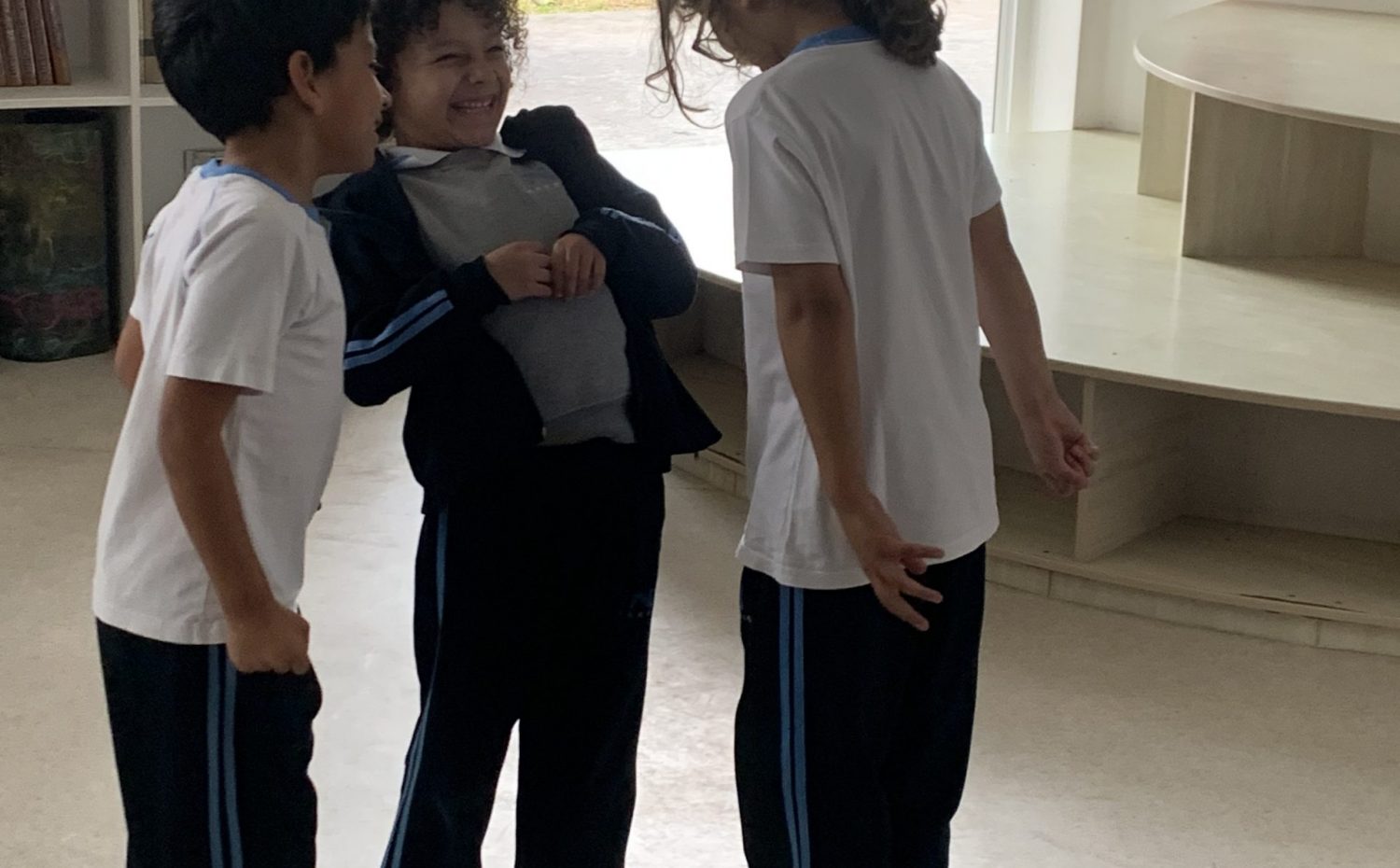
At Nordic International School, the drama programme in early years and grade II is grounded in key principles drawn from Nordic educational traditions, where learning is understood as an active, experiential and deeply meaningful process. From this perspective, theatre in the early years is not viewed as preparation for immediate performance, but as a rich learning environment in which the body, play and imagination become a child’s first language of expression.
At this stage of development, theatre supports children through pre-expression, a vital phase in which they begin to discover that their bodies, gestures, voices and emotions can communicate ideas, feelings and meaning. Through movement, exploration and symbolic play, students gradually build an understanding of themselves and of the many ways in which they can connect with and express their experience of the world around them.
Our programme embraces this approach by prioritising the creation of a safe, joyful and stimulating environment, where curiosity is encouraged and experimentation is valued. At this level, the goal is not to produce a final performance, but to allow meaning to emerge naturally through play, nurturing each child’s confidence, autonomy and expressive potential.
Learning through play and discovery
Between the ages of six and seven, children reach an important developmental moment for understanding the foundations of theatrical language. For this reason, the course is built around practical and sensory experiences, inviting students to learn by doing, exploring and collaborating with others.
Throughout the programme, students:
- recognise and regulate their physical and gestural expression through imitation-based activities such as mirror exercises and school of fish dynamics, working both in pairs and in groups. These experiences foster observation, body awareness and coordination, while enriching creativity through empathy, cooperation and shared exploration;
- explore the relationship between movement, emotion and intention by working with different levels of intensity and their combinations. Students experiment with movement (soft/small and strong/large), emotion (calm or low, active and intense) and intention (direct or indirect), developing an early understanding of how the body communicates what we feel and what we wish to express. This exploration is also supported through simple choreographic sequences designed with accessible movements that invite children to work with rhythm, tempo and intention, helping them experience how meaning in theatre emerges not only from what we do, but from how and why we do it;
- engage with pantomime as an expressive tool to bring imaginary objects and silent narratives to life. Through activities that require no physical props, children learn to create form, scale, action and meaning using only their bodies and imagination;
- experiment with vocal and bodily sound, imitating both domestic and wild animals such as dogs, cats, birds, lions, frogs and snakes, using voice and movement as expressive resources. In connection with the Fiestas Patrias celebrations, this exploration was extended through a cross-curricular project on Peruvian fauna, in which students investigated and recreated the sounds and movements of native animals, including the pink river dolphin, the otorongo (jaguar) and the Andean cock-of-the-rock, deepening their cultural awareness while expanding their expressive range;
- identify and recreate sounds from nature, including rain, wind, thunder, flowing water and rustling leaves, as well as sounds from everyday life such as doors opening and closing, footsteps on different surfaces, clocks, bells and vehicles. These sounds are woven into dramatic play, expanding students’ auditory awareness and imaginative expression;
- understand theatre as an art form rooted in play, curiosity and imagination, gradually giving shape to small communicative proposals such as short, collaboratively created scenes, where the emphasis lies on process rather than outcome.
These experiences reflect a central Nordic belief: children learn best through active exploration rather than passive reception. At the same time, the process supports holistic development by strengthening attention, creativity, emotional awareness and embodiment—essential foundations for later learning in theatre and beyond.
The expressive body as the first instrument
The programme also draws on the work of Argentine theatre pedagogue Jorge Eines, who reminds us that acting truly begins when a student “discovers their own body as an expressive instrument.” In early years and grade II, this discovery unfolds naturally through guided play, structured improvisation, movement games and imaginative scenarios.
In line with Nordic pedagogical approaches, children are invited to experience before they analyse: to touch, feel, explore, imagine, play and embody. This experiential process nurtures authenticity, spontaneity and sensitivity, laying the groundwork for future skills such as character creation, scene composition and the exploration of more complex roles.
Soft skills and the democratic space of drama
Within the Nordic tradition, drama is not only a space for artistic learning, but also a democratic learning environment. Each theatrical activity invites children to listen, share, collaborate and co-construct meaning with others.
Through this work, students develop:
- self-confidence,
- active listening,
- awareness of shared space,
- creative initiative, and
- teamwork.
Each session encourages children to balance self-expression with group harmony, an essential competence for future learning both within and beyond the arts.
Before the stage: building conscious performers
Children’s theatre is often imagined simply as “placing children on a stage.” Nordic educational thinking, however, places strong emphasis on readiness. Before stepping into a performance context, children must develop spatial awareness, understand their own bodies, recognise their emotions, and feel safe and grounded in their creativity.
When these foundations are firmly in place, performing becomes a meaningful, enjoyable and genuinely educational experience rather than a moment of pressure or imitation.
A foundation for lifelong learning in the arts
In the early years, theatre is far more than acting. It teaches children to imagine boldly, to play collaboratively, to trust themselves and their peers, and to create meaning together.
This is the true purpose—and the true magic—of the performing arts in the first stages of learning: nurturing not only future performers, but expressive, confident and emotionally aware human beings.